Location
Breda
Pagina laden...
You want to solve problems like climate change and plastic soup. Environmental Science for Sustainability, Ecosystems and Technology turns you into an environmental professional.

Stopping climate change is a major challenge for now and the future. Just like protecting valuable ecosystems or tackling bad air quality in cities. We teach you how to develop solutions for this. You use a combination of biology and chemistry, also management and technology.
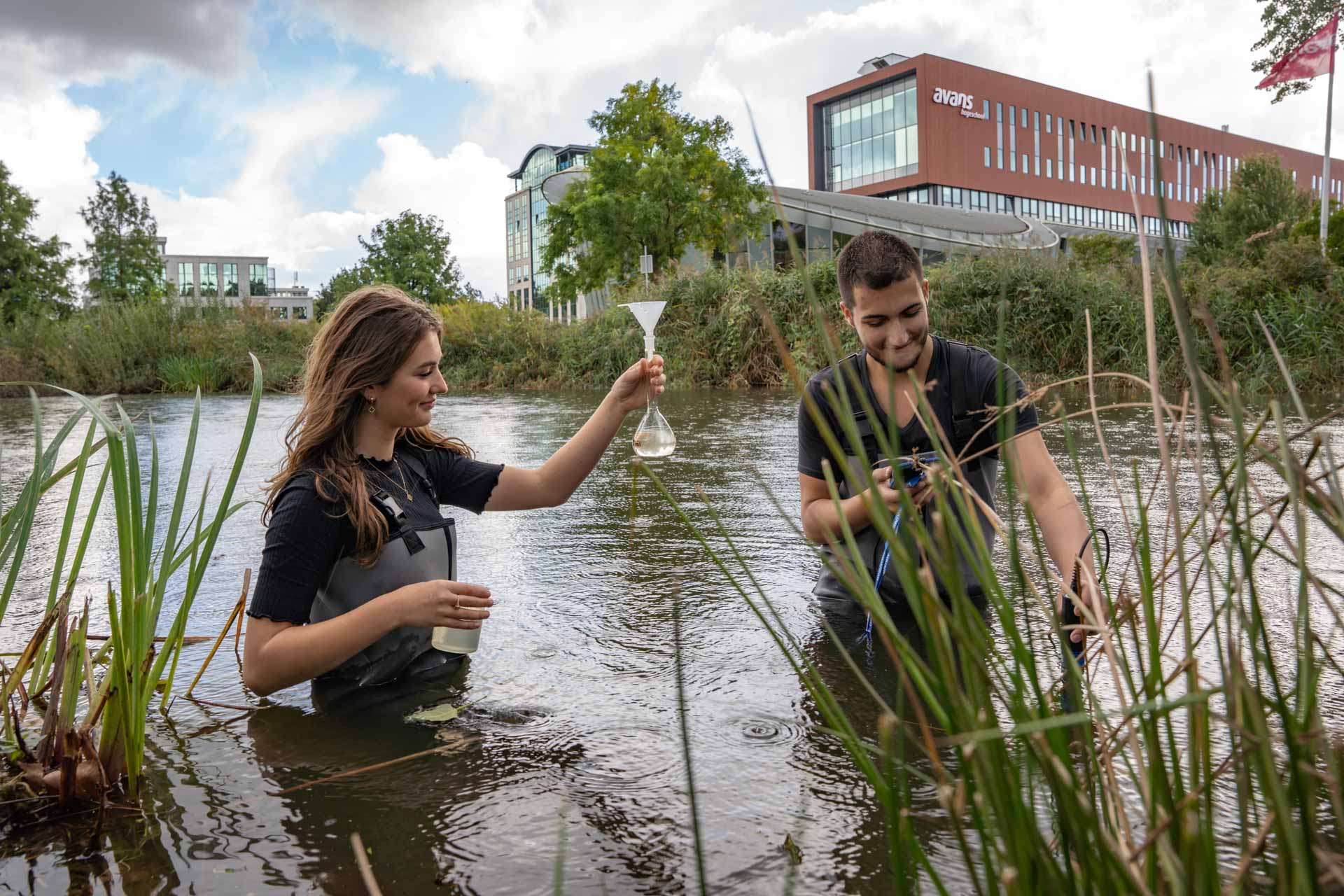
Research the habitat of dolphins in Greece. Manage a company's CO2 emissions. Produce bioplastic from wastewater. These are examples of assignments that you can carry out with the competencies, skills and knowledge gained through our programme.
Starting from year 1 you choose between project assignments focusing on biology and nature-based solutions, or chemistry and innovative technology. 25% of your study programme is free of choice, so you can further design your study path, suited to your interests and strengths.
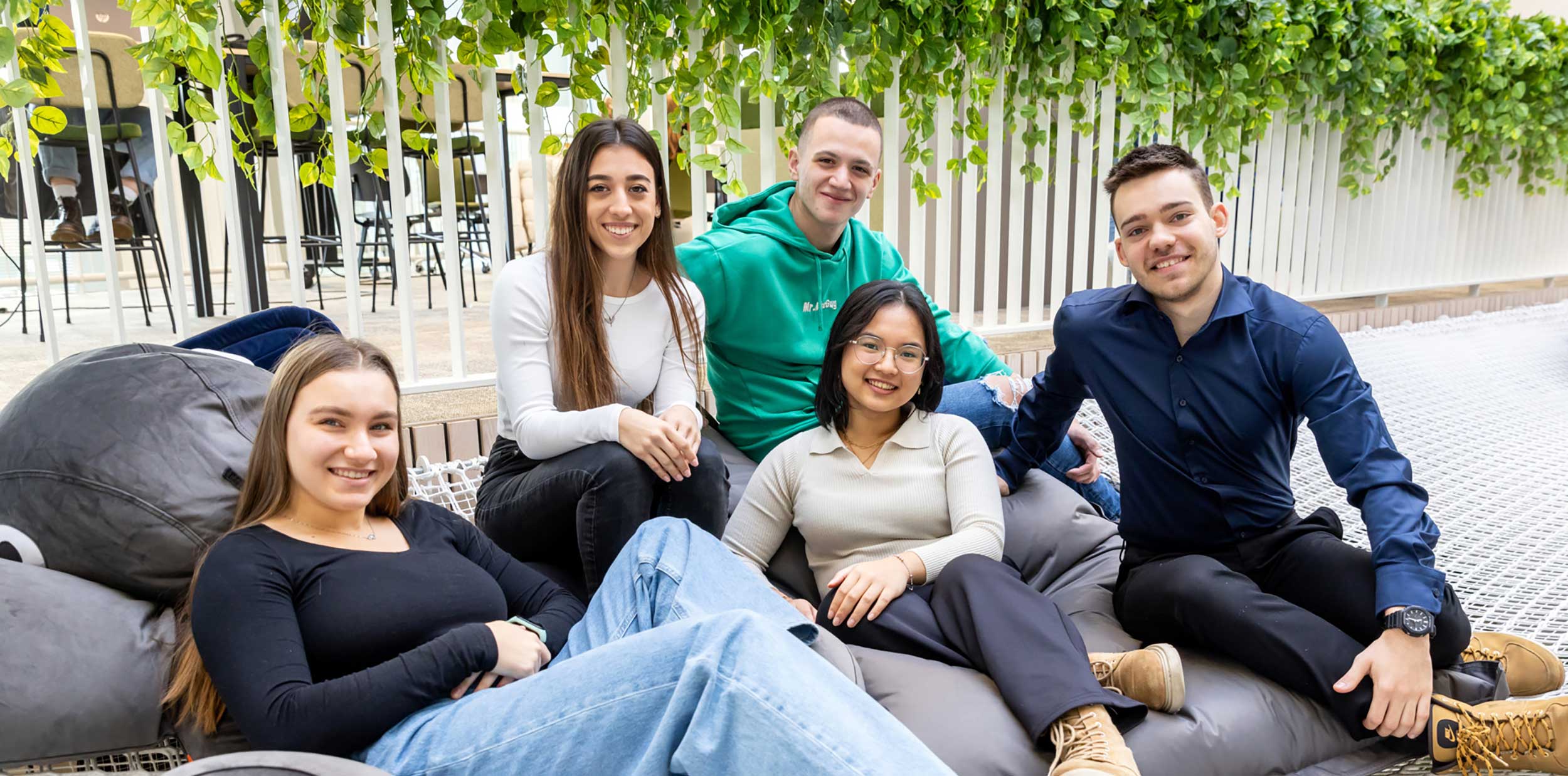
You study in an international environment. This is reflected in the content of projects and the internships abroad. But also in collaboration with students and teachers of different nationalities.
You will gain valuable career-oriented experience through projects for real clients, international field trips and 2 work placements.
You will graduate with a Bachelor of Science (BSc) degree.


ESSET is a versatile and practical study programme. Starting from year 1 you choose between projects focussing on biology and nature-based solutions, or chemistry and innovative technology. In class activities you focus on developing your skills. We offer options to make choices in year 2 (choice modules) and year 4 (minor programme) to develop your personal profile. In year 3 you choose between 2 semester programmes: Sustainable Energy & Resource Recovery or Water Management, Ecosystems & Climate Change.
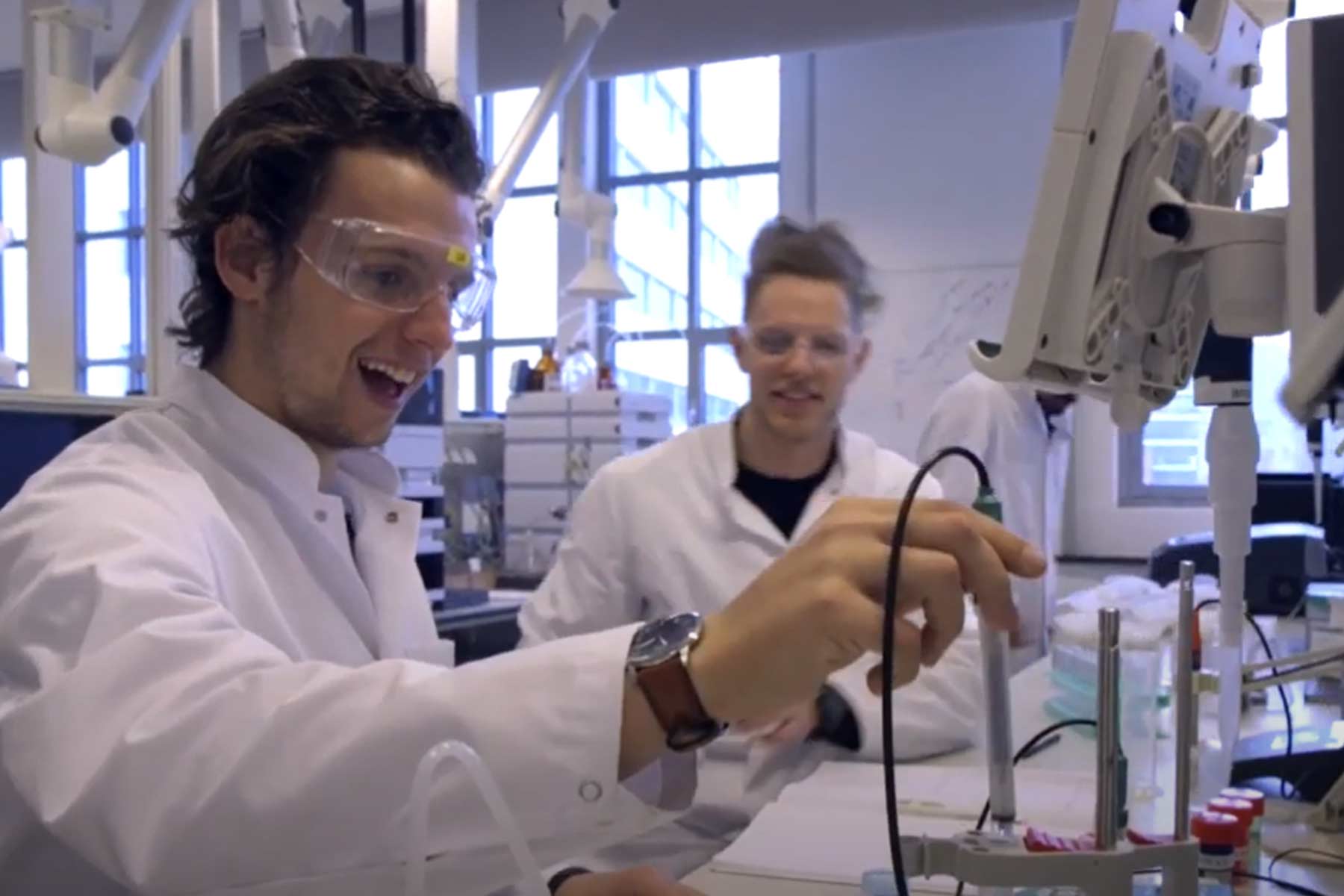
In the first year, you will be challenged with relevant themes such as climate change and plastic soup. In 4 quarters, you will work on these themes and various practical assignments, combining theory and practice. You will also conduct experiments in the lab, do field research in nature and process environmental data with mathematical models. You will also work on your communication and intercultural skills, and discover your strengths under the guidance of a personal coach.
In the second year of ESSET, you will deepen and broaden your knowledge and skills. You will work on sustainable products, circular economy and nature-based solutions. You will have the opportunity to specialise further with modules in sustainable technology or ecosystem management, or you can follow modules taught together with other programmes within Avans. This freedom of choice allows you to connect to what motivates you and what you want to become good at.
In the third year you do an internship and you can choose between 2 semester programmes: Sustainable Energy and Resource Recovery or Water management, Ecosystems and Climate Change.
Internships vary from working for an environmental consultancy to doing research at an institute. You are in the lead when finding and selecting an appropriate internship opportunity.
In your fourth year, you can take the minor Biobased Technology & Business Development, Disruptive Events or a minor in another programme at Avans. Or at our partner universities. This allows you to pursue new or interdisciplinary topics and further enrich your professional competencies. During the second half of the year you will complete a graduation assignment within a company, agency or organisation. You can choose between the graduation projects we have available or find one yourself.
The job opportunities after you graduate are excellent. You could, for instance, join a government agency where you would develop and implement environmental policies. Or you might target an Environment, Health and Safety job in industry. Or maybe you would prefer to work in an environmental consultancy where assignments range from technical solutions to environmental licensing or policy-making.

You provide science-driven and cost-effective advice to a wide range of clients on topics such as soil remediation, climate change adaptation, energy use reduction and air quality.
You work for a government agency where you have to determine how the government can achieve certain environmental goals. You also have to monitor implementation of the policy proposed and check whether you achieve the goals.
Many industrial activities require an environmental licence. You work for the government to produce the environmental licence for a specific company. Or you check the company to see whether it meets the licensing requirements.
You work in industry. You are responsible for a safe working environment for the employees of the company. You also have to make sure the company works within the boundaries of its environmental licence. You keep pushing the company to develop more sustainable production techniques.
You work for a government agency or a water board. You may be involved in water treatment techniques or in managing water quality and quantity.
You work in a company's R&D department. You mainly assist colleagues with their projects but also do research into new technological developments that will lower environmental impacts.
You want to keep the planet safe for future generations. You are concerned about climate change, biodiversity loss, plastic waste and water pollution. You are interested in science subjects and are open-minded towards other cultures. You are a team player and, at the same time, self-motivated. You are adventurous, independent and enthusiastic about studying and working abroad. If you recognise yourself in one or more of these qualities, then the ESSET programme is perfect for you.
After the ESSET programme you can apply for the Avans master Materials & Energy Transition to obtain a Master of Science degree (MSc). Or you can apply for a master's programme at other universities, for example in Wageningen, Utrecht or Maastricht. Possible subjects are sustainable development, industrial ecology and environmental technology. Depending on the programme, you might need to take a preparatory semester or year before you can be admitted.
With a diploma equivalent to a Dutch pre-university level diploma you are eligible to follow the fast track programme, in which you will graduate as a BSc in 3 years. Your diploma must include Mathematics, Chemistry and English as subjects. It is further helpful If you have followed Biology or Physics in high school, but these are not required.
If you are unsure whether you meet the admission requirements for the fast track programme, please contact us. If we are not familiar with your foreign diploma, the Dutch organisation for international recognition of diploma (NUFFIC) will check the level. You can either start the fast track programme in September or February.
The level of your prior education has to be equivalent to a Higher General Secondary Education level (Dutch havo) with Mathematics and English or a Pre-university level (Dutch vwo) with Mathematics, Chemistry and English
Additional knowledge of science subjects like Chemistry, Biology and Physics is beneficial for the 4-year programme, but not a requirement. If you intend to join the 3-year fast track, certain admission requirements apply.
If you are unsure whether you meet the admission requirements, please send us an email. If we are not familiar with your foreign diploma, NUFFIC, the Dutch organisation for international recognition of diploma, will check the level for us.
Read more about international secondary education diplomas.
We created an intake process to get to know you better. It consists of a questionnaire, a motivation letter, and your curriculum vitae. Following this, you will have the opportunity to request a personal interview. During the interview, we will provide feedback on the information you provided and offer you the chance to ask us any further questions you may have.
At Avans University, we believe it is important that you not only gain a clear understanding of the study programme you have chosen, but also of life in the Netherlands and the city where you will be studying. We also want to emphasize that support is available if you need it. That is why we aim to discuss this with you early on, so you are aware of the ways we can assist you throughout your studies.
The intake process is mandatory for students from outside Europe, as studying in the Netherlands can be a significant transition. It enables us to prepare you thoroughly and offer tailored support to help you feel at home from the very beginning.
If you have decided to pursue this study programme you will need to register for it. Please apply via our Dutch website if you are a Dutch student.
Before you apply read the detailed information about our English language admissions requirements.
You must apply for this bachelor's degree programme via the Studielink website. Studielink is the Dutch portal used for all educational programmes. All students studying in Netherlands use Studielink to register for their programme.
In addition to the application procedure via Studielink you must also send us several documents.
Before you do, make sure you have informed yourself about our .
If you want to apply for this study programme, please search for 'B Environment' to find this programme in Studielink.
Registering for a programme is done via Studielink. You do this by logging in with your DigiD. Requesting a DigiD takes 5 days.
Register via Studielink| Starting month | Location | Deadline |
|---|---|---|
| September | EEA | August 31, 2026 |
| September | Non-EEA | May 1, 2026 |
Please note: applicants with a Dutch diploma must have applied by the 1st of June. Non-EEA students with a non-Dutch diploma also apply by the 1st of May. The deadline for EU students with a non-Dutch diploma is the 1st of June. When you meet the deadline you give Avans enough time to process your application and, if applicable, apply for a visa.
After application we will contact you to inform you on the further procedure.
Scholarships are much sought after nowadays: nearly every student who decides to study abroad considers applying for one. Information about scholarships specific to Avans University of Applied Sciences can be found on .
For more information please contact Student Info on +31 (0) 88 525 75 50 or via this contact form.
In the overview below you will find the tuition fee amounts that have been set for new students at Avans University of Applied Sciences.
Which of these 3 fees applies to you depends on the category you are in. In general, students from the European Economic Area (EEA) pay the statutory fee, while other students pay the institutional or non-EEA fee. Exchange students generally pay their tuition fees to their home institution and not to Avans.
Please check the tuition fees page for detailed information.
| Tarif | Year | Amount |
|---|---|---|
| Statutory fee | 2025 - 2026 | € 2.601,- |
| Institutional fee | 2025 - 2026 | € 9.949,- |
| Non-EEA fee | 2025 - 2026 | € 9.949,- |