Location
Breda
Pagina laden...
The Master of Materials & Energy Transition focuses on engineering solutions for the energy transition and circular economy. Combine study with work-based learning and make a direct impact in practice.
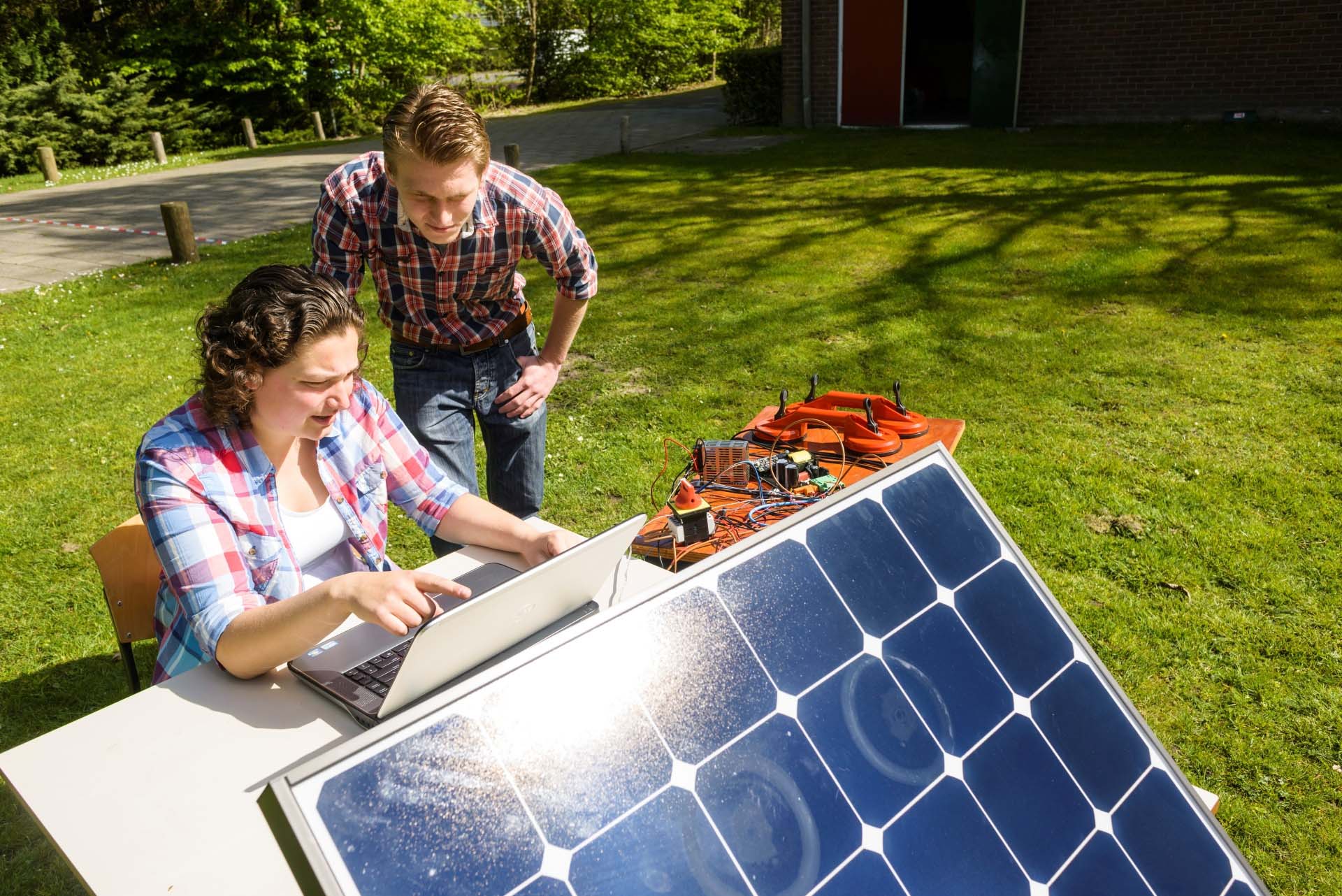
This practice-oriented master's programme centres on applied research in collaboration with the professional field. From the very beginning, you will be bringing your work into practice. You will learn to develop technical solutions for challenges related to the use of energy and materials. You will delve into the technology behind these solutions and the state-of-the-art knowledge available. This provides you with a solid technical foundation for your future career.
Most of all, you learn how to implement technical solutions to real-world problems. This involves more than just technology. Financial aspects, policy, and acceptance by individuals, groups, and society all play a role. You will be able to identify these stakeholders in transition processes, and engage them to create real impact.
This master's programme therefore offers not only in-depth theoretical and technical knowledge, but also practical insight. You will collaborate with people from diverse backgrounds. This master is taught in English.
You will graduate with a Master of Science (MSc) degree.
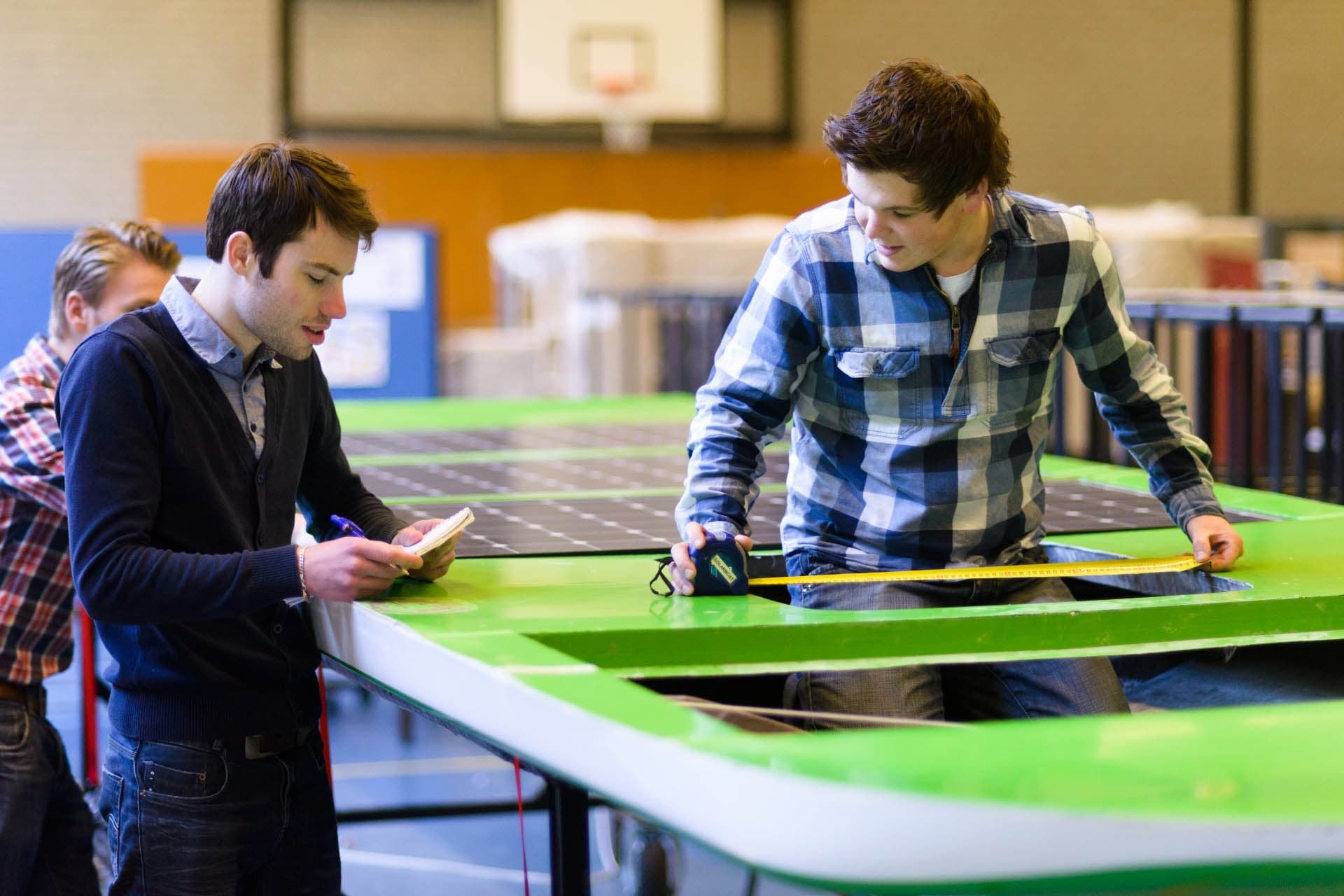
In the 2-year programme, you apply scientific knowledge and technology for real-world projects. In year 1, you take courses and gain practical experience through a work-based learning placement. In year 2, you complete an individual graduation project in the professional field.
The MET master places great importance on building a learning community and guidance on a personal level. The community supports you throughout your studies and offers a valuable network for when you enter the workforce.
The first academic year consists of 4 periods of 10 weeks. In each period, you take 2 courses and work on a project assignment that you apply at your work-based learning placement. After the introduction in period 1, the focus shifts successively to materials, energy, and transitions. This gives the first year a clear structure and narrative.
In year 2 you complete your individual graduation project. For this purpose, you first make a plan of action about an issue you find interesting. You then complete your project at an external organisation or at an Avans research group. At the end, you present your project and graduate.

Your MSc degree in Materials & Energy Transition will offer you plenty of job opportunities. It equips you to make the societal transition to a circular economy, based on sustainable sources of materials and energy, a reality. It requires people who dare to take ownership of real-world challenges.
The transition is happening everywhere: at small companies and multinationals, but also at start-ups. In local or (inter)national governments, and in all sorts of organizations. By the end of the program you will have learned much more about this, and discovered where you want to make your impact. And, you will know what roles suits you best: project leader, product or process engineer, consultant, researcher. All are available to you.
Whatever job you will find, it will always involve real-world engineering solutions that can make a real difference. You will become a true transition maker, and such people are always needed.
You will mainly work for consultancy and engineering firms, where you consult on the correct implementation of sustainable material use and sustainable energy.
You will be responsible for the development and improvement of machines, processes and installations within companies. You will contribute to making the process industry and the energy-intensive industry more sustainable.
You will be responsible for research and design. You possess solid technical knowledge of both sustainable materials and energy. And you know how to integrate this knowledge in existing and new products and systems.
You conduct research into innovative technologies. And you develop sustainable products and/or processes in the field of materials and energy transition.
You will be working in the field of risk management, lifecycle management, sustainability and reliability of assets. You will ensure a reduction of the risks and costs, improvement of the service life of assets and the reduction of the strategic use of materials.
You will ensure that the projects are evaluated in terms of sustainability, so the right choices can be made in terms of sustainable material and energy usage.
You enjoy working on real-life cases and want to deepen your theoretical and technical expertise. You are a team player. Someone who enjoys working with people within and outside your own field of expertise. You know that agreement is necessary to make your work impactful and usable. You are also interested in your own broad development and you think from an interdisciplinary perspective.
You must hold a certificate or diploma demonstrating that you have successfully completed a Bachelor's degree in the life sciences or engineering sector before 1 September 2026. Examples include built environment, chemical engineering, chemistry, electrical engineering, environmental sciences, industrial engineering and management, or mechanical engineering.
A work-based learning placement is required for this master's programme. Avans can support you in finding one.
Spoken and written proficiency in English is required (ie. IELTS, TOEFL or Cambridge).
These assignments are part of the preparation. You must submit the following documents via our assignment site:
You will receive the login codes for the intake dashboard after you have enrolled in Studielink.
A work-based learning placement is mandatory for this master's programme. If you have trouble finding a work-based learning placement on your own, we can support you in the process. Admission to the programme is only confirmed upon receipt of a signed agreement by the company."
Each student is invited to an assessment after their submitted assignments have been approved. This interview with one of the lecturers takes place in person or online via Teams. During the admission process, we assess your study motivation, English proficiency, and theoretical knowledge and skills relevant to this master's programme. You must successfully complete this assessment to be admitted to the programme.
If you have decided to pursue this study programme you will need to register for it. Before you do, make sure you have informed yourself about our rules and regulations.
Please apply via our Dutch website if you are a Dutch student.
You must apply for this master's degree programme via the Studielink website. Studielink is the Dutch portal used for all educational programmes. All students studying in Netherlands use Studielink to register for their programme.
In addition to the application procedure via Studielink you must also send us several documents.
Registering for a programme is done via Studielink. You do this by logging in with your DigiD. Requesting a DigiD takes 5 days.
Register via Studielink| Starting month | Location | Deadline |
|---|---|---|
| September | EEA | August 31, 2026 |
| September | Non-EEA | May 1, 2026 |
After application we will contact you to inform you on the further procedure.
Scholarships are much sought after nowadays: nearly every student who decides to study abroad considers applying for one. Information about scholarships specific to Avans University of Applied Sciences can be found on our scholarship page.
For more information please contact Student Support on +31 (0) 88 525 75 50 or via this contact form.
In the overview below you will find the tuition fee amounts that have been set for new students at Avans University of Applied Sciences.
Which of these 3 fees applies to you depends on the category you are in. In general, students from the European Economic Area (EEA) pay the statutory fee, while other students pay the institutional or non-EEA fee. Exchange students generally pay their tuition fees to their home institution and not to Avans.
Please check the tuition fees page for detailed information.
| Tarif | Year | Amount |
|---|---|---|
| Statutory fee | 2025 - 2026 | € 2.601,- |
| Institutional fee | 2025 - 2026 | € 9.949,- |
| Non-EEA fee | 2025 - 2026 | € 9.949,- |