
International collaboration at Avans: “It’s about skills, not about travel”
International collaboration within Avans is taking on increasing shape – and, above all, meaning. Susan Byrne, who coordinates international collaboration at her academy, and Edgar van Noort, regional account manager, explain how this collaboration contributes to essential skills for students and lecturers. Student Pieter Roozendaal experienced this first-hand during his trip to Finland, which offered him some surprising insights.
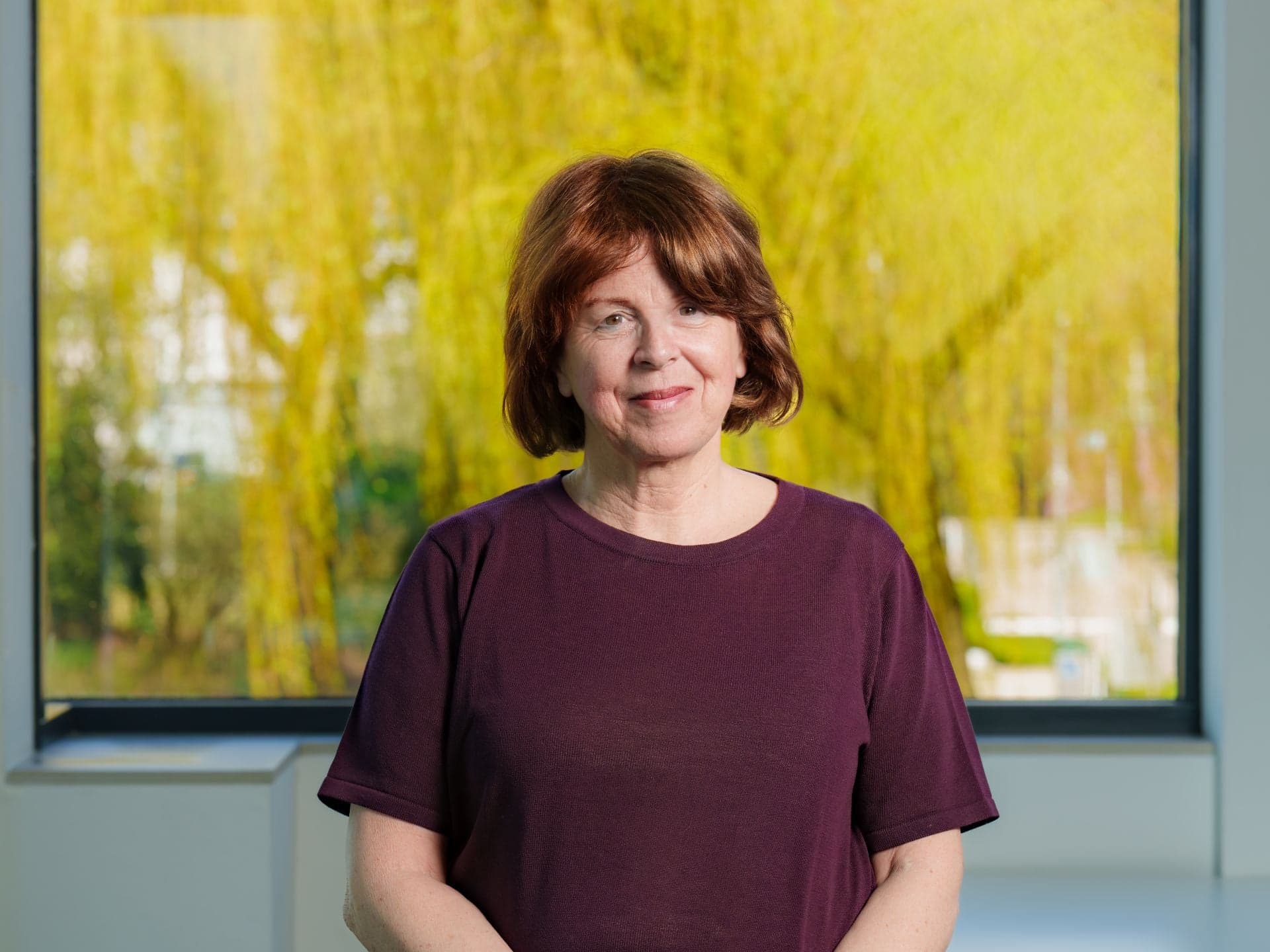
Susan and Edgar, how do you contribute to international collaboration at Avans?
Susan: “Together with a colleague, I coordinate international collaboration for several degree programmes. I’m originally from Ireland, have lived in Germany and England, and have now been living in the Netherlands for more than 25 years. I’ve also taught extensively abroad, at universities and universities of applied sciences in Ireland, Spain and Germany. I wish that kind of international experience for everyone at Avans.”
Edgar: “As one of Avans’ three regional account managers, I’m responsible for strategic relationship management with our international partners. My regions are Scandinavia, Spain, Portugal, and Central and South America. We’re constantly in dialogue with the academies to identify their needs: what do our students and programmes require? For example, in the Entrepreneurship & Retail Management programme – where I also teach – negotiating at a distance is becoming increasingly important, for instance with Spanish-speaking partners. As an account manager, I then look for a suitable partner for an online project.”
Why is international collaboration so important?
Susan: “We live in an increasingly globalised world. Someone once said: ‘Most students will end up working in Brabant anyway.’ But even in our immediate surroundings, so many people from abroad live and work here. International collaboration helps students develop essential competences: they become more flexible, gain a broader perspective, and develop problem-solving skills, to name just a few. It’s not just about ‘going abroad and having a good time’. It’s about the skills you need to function in today’s world – and that future employers value.”
Edgar: “I completely agree. Even within Dutch organisations, you’re increasingly dealing with international clients, suppliers or colleagues. Embracing cultural differences is essential. Together with colleagues, I also coordinate exchange programmes. After six months abroad, students return as different people. Their evaluations show how much they’ve learned – academically, but also personally. Solving problems. Becoming self-reliant. Gaining the confidence to speak English. That’s real enrichment.”
“And I haven’t even mentioned our lecturers yet: they learn a great deal as well – about didactics, different teaching methods, subject matter, and of course culture.”
What are the main challenges?
Susan: “Sometimes students only hear quite late that they can participate in an international project. By then, their priorities are often focused on credits and exams.”
Edgar: “That’s often also due to cultural differences. In countries like Spain and Portugal, things are frequently organised at the last minute.”
Text continues below the photo
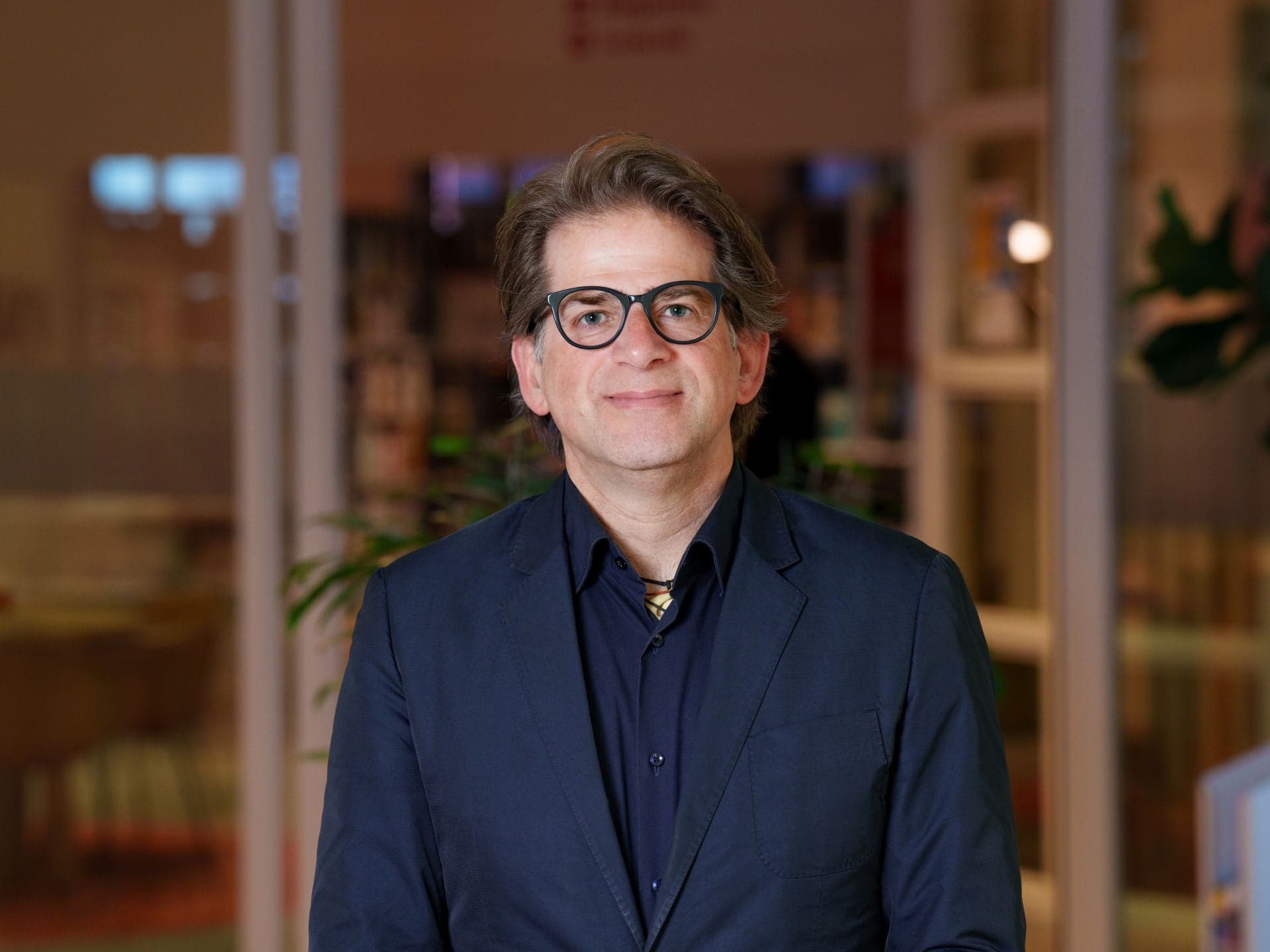
Edgar van Noort
“Another challenge – or rather, an ambition – is to strengthen collaboration in the field of research. There is a great deal to learn from one another in that area as well. In that respect, the European alliance PIONEER provides a strong foundation. PIONEER is an alliance of ten universities and universities of applied sciences from ten different European countries. Within PIONEER, we collaborate on sustainable, inclusive and resilient cities and communities. What makes it special is that we work together in education, co-creation with professional practice, and research.”
What are you most proud of?
Edgar: “With several PIONEER partners, we recently organised our first Blended Intensive Programme (BIP). This is a relatively short exchange with both a physical and an online component. Next year, more PIONEER partners will be involved. Hopefully, we’ll be able to organise it each year with a different partner. We’ve also helped many academies find new partners for online collaboration. And don’t underestimate that: students can collaborate internationally very effectively from behind their laptops on all kinds of topics. It’s easy to organise, relatively affordable, and students find it incredibly valuable.”
Susan: “I’ve also been involved in a BIP for several years now, which has taken place in Ireland, Spain and the Netherlands. Over the years, the collaboration has only grown stronger; everyone is equally motivated and fully committed to the students. In just one week, international student teams work incredibly intensively together on a concrete assignment. That’s simply fantastic.”
Pieter, you participated in such a BIP and spent a week in Finland. Why?
Pieter: “The opportunity came up, and to be honest it mainly sounded like a lot of fun. I thought: if I learn something along the way, that’s a bonus. But I ended up learning a huge amount.”
“Sustainability, for example, was a central theme. That’s not something I was immediately enthusiastic about – I’m fairly right-wing myself – but I really gained new insights. For instance, how you can contribute to a better world in small ways. Translating that to my Mechatronics programme, for example by using materials more consciously. I didn’t expect that.”
What else did you do?
Pieter: “We visited an ice hockey match and a former military island, among other things. Those are experiences you don’t easily have in the Netherlands. It was also just a lot of fun. I was there with students from Technical Computer Science, Mechanical Engineering and my own programme, as well as Finnish and German students. It’s great to meet people and experience cultural differences. The Finns needed a bit of warming up, and the Germans too – but once they loosen up, you talk just as easily with them as with Dutch students.”
Text continues below the photo
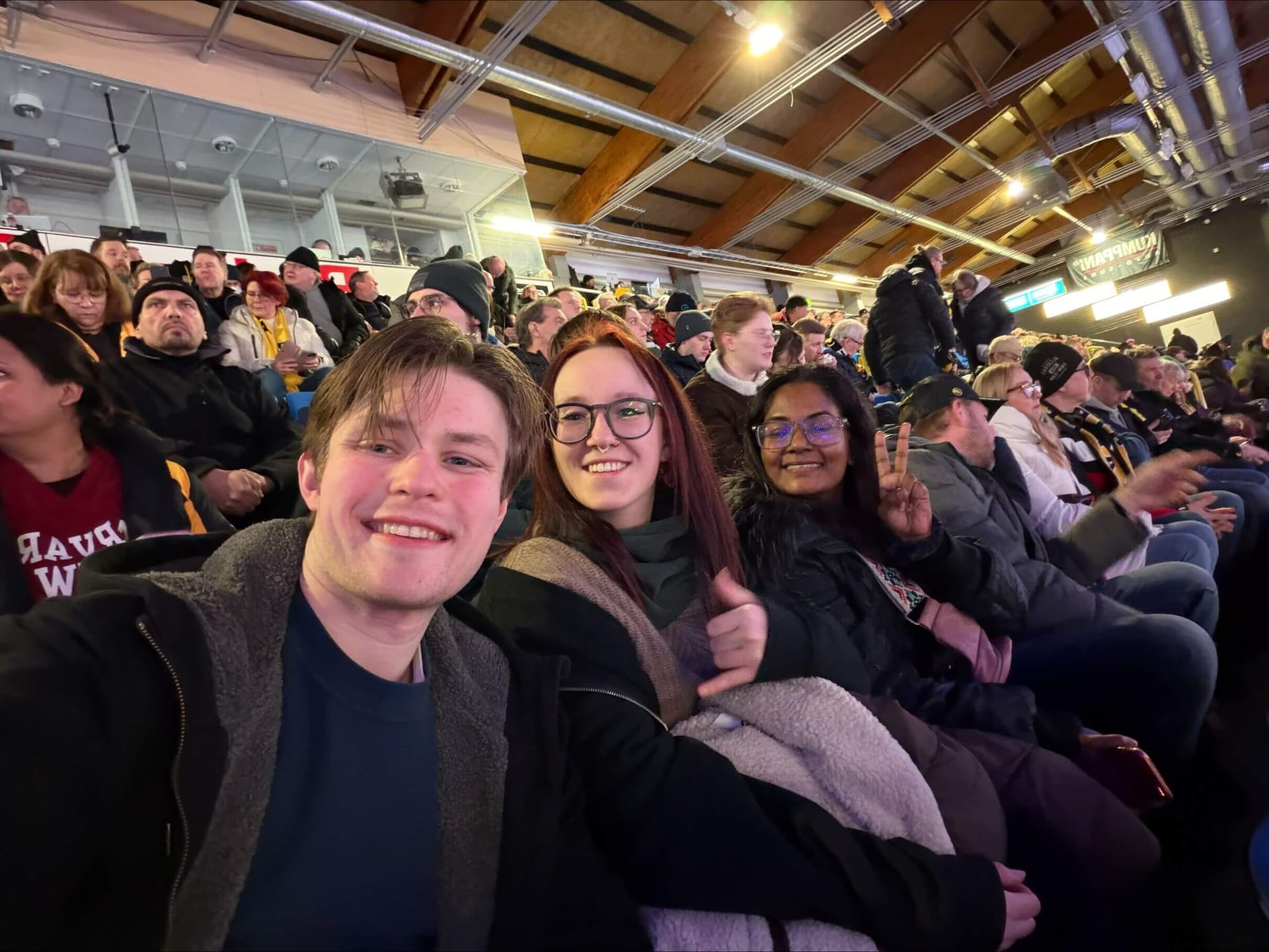
Pieter on his BIP in Finland
“It also helped that we followed online classes on sustainability and practical travel sessions beforehand. That meant we were well prepared, while German students still had many questions.”
So it was a successful trip?
Pieter: “More than that. The combination of content, culture and a different environment is fantastic. It’s not just a trip – you genuinely learn from it. I would do it again in a heartbeat.”
Read more about PIONEER, the European alliance in which Avans participates