Location
Breda

Bioinformatics is a combination of life science and informatics. It involves programming and data handling, numerous applications and software packages to handle and visualize data. Perhaps most importantly it involves communication between biologists and scientific programmers.
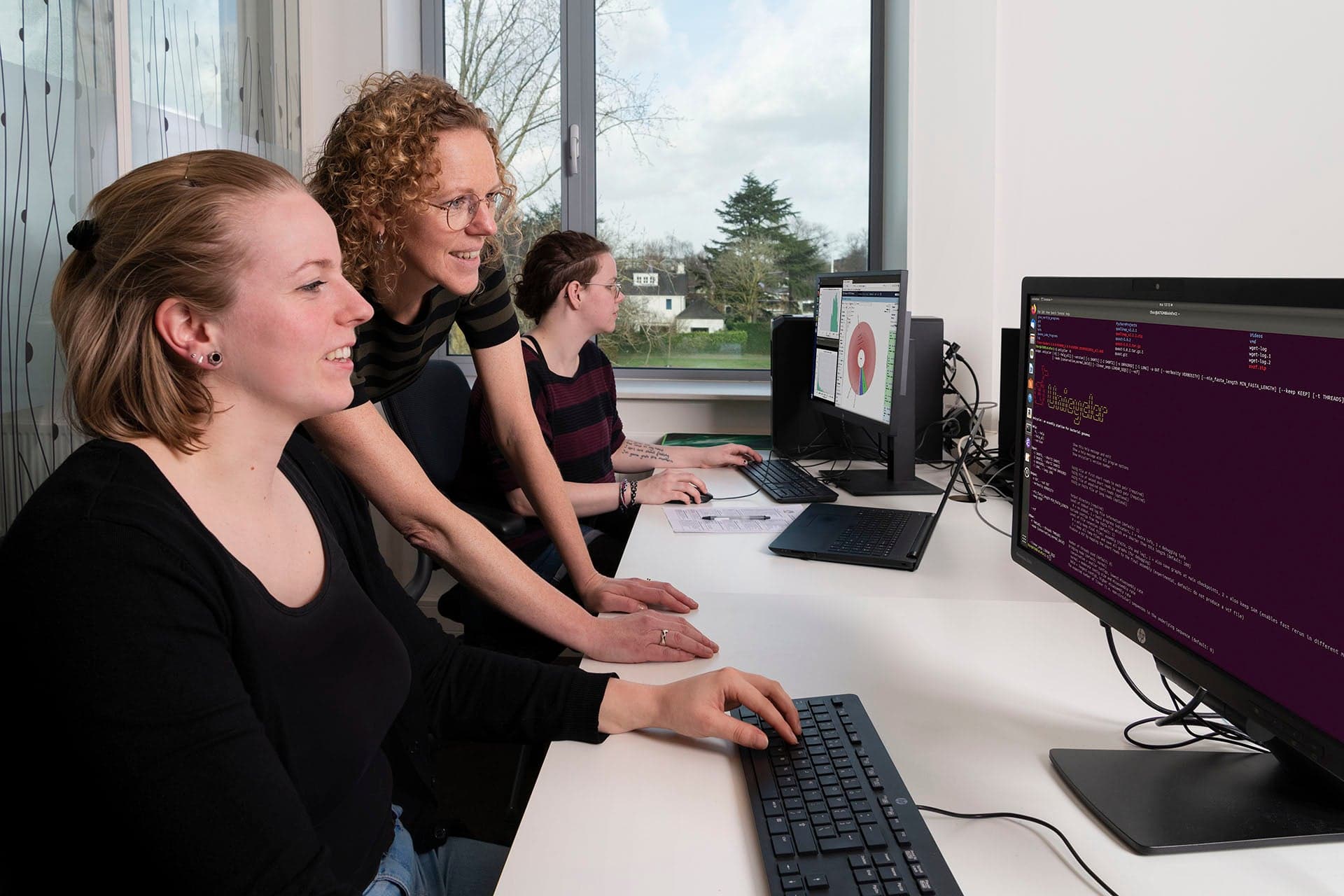
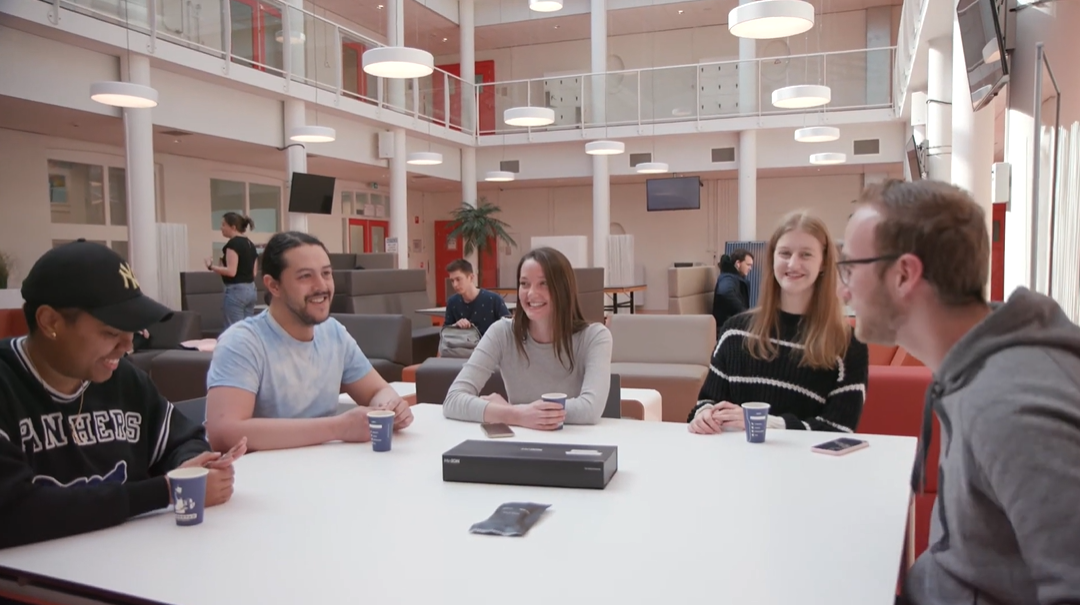
In this minor, you will learn how to process and visualize biological data. You can divide the minor into roughly three parts:
In the setup of the courses, diverse aspects of bioinformatics are highlighted at various omics levels. Within projects, students gain in-depth knowledge of various aspects of bioinformatics.
To stay up to date, projects are in collaboration with experts from the relevant fields. These researchers will also be involved in the projects as your external supervisors. Students majoring in a Dutch Biology and Medical Laboratory Research program are welcome to this minor. Students from other programs will be admitted accordingly based on the intake results. Students from abroad are welcome, as per national/international agreements.
This minor will be given exclusively in English.


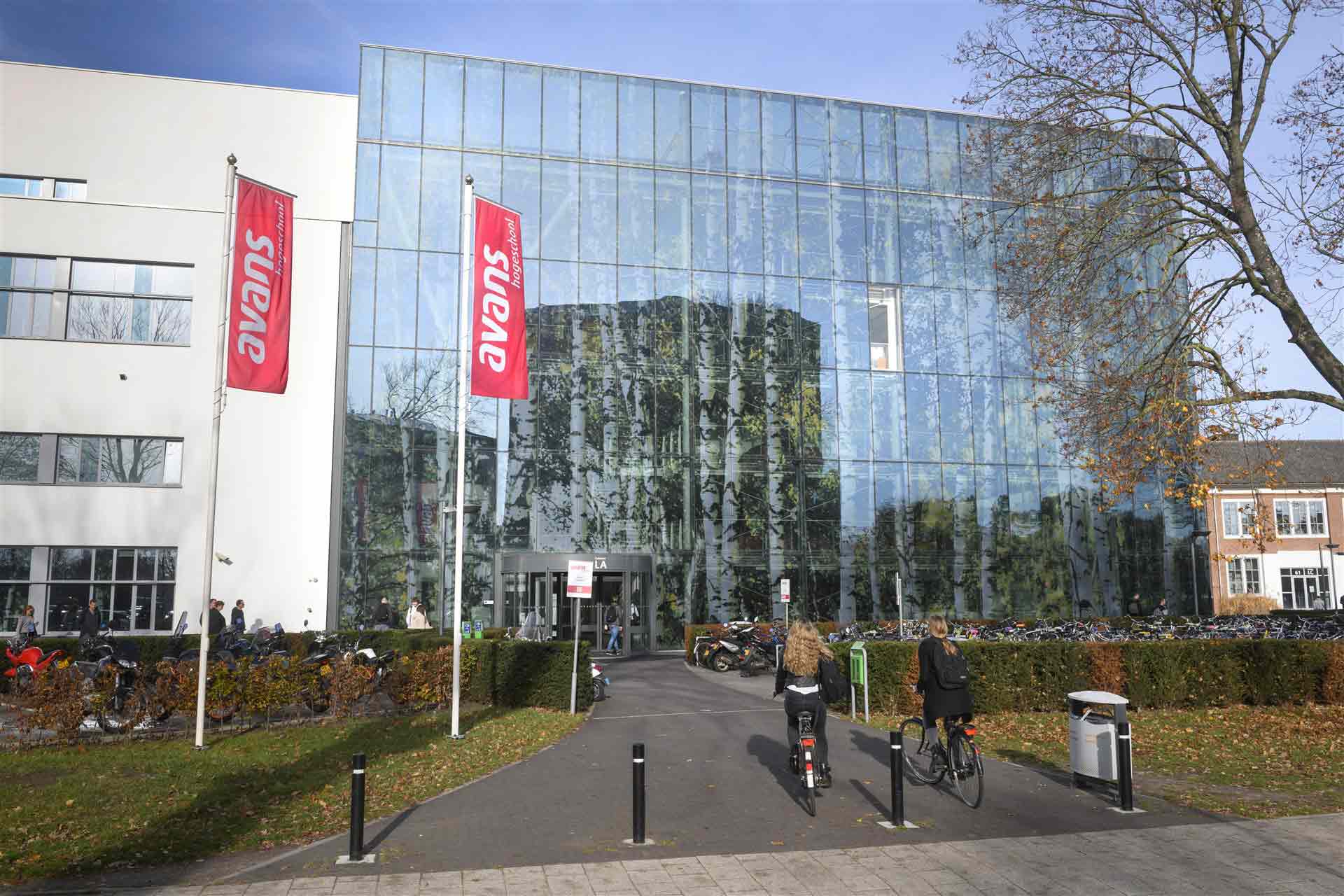
Lovensdijkstraat 61-63
4818 AJ Breda
Tel: +31 88 - 525 75 00

Our current study programme takes place in a modular education approach with three learning outcomes.
The weight of this minor is 30 ECTS. 15 ECTS credits are reserved for the project, and 15 ECTS credits are allocated to courses.
Learning outcome: The student can independently prepare, analyze, and visualize biological datasets using advanced methods and tools appropriate to the complexity of the data. The student develops reproducible and well-documented scripts in R, shell, and Python, applies statistical and computational methods to discover patterns and relationships in the data, and documents the entire analysis process so that it can be followed and repeated by others.
Learning outcome: The student is able to independently analyze and interpret bioinformatics data within a biological context by applying statistical and computational methods to complex datasets from omics-data. The student can identify and correct programming errors and data misinterpretations and explain the biological implications of these errors. Furthermore, the student can correctly document according to the FAIR principles and present the results of their analyses, providing a clear justification of the methodological and analytical choices in relation to biological theory.
Learning outcome: The student is capable of working independently and in collaboration on a bioinformatics research project applied to a current societal theme within the life sciences. The student demonstrates the ability to translate complex biological questions into a bioinformatics approach in accordance with the FAIR principles, including data analysis, visualization, and interpretation. In doing so, the student makes use of relevant programming languages, software tools, and cloud computing environments. The student justifies choices made during the research process, communicates effectively with the disciplines involved (professional field), and presents the research both in writing and orally at a minimum of NFLQ6 level.
Projects are in collaboration with experts from the relevant fields. The projects are divided into several categories. You work in duos or individually. The project topics are clarified during the kickoff meeting for the minor. 15 ECs are reserved for the research project, in which you will work in groups of 2, setting up and implementing a research plan.
Topics of projects include, but are not limited to:
Lessons and activities during the minor:
This minor is given in the fashion of "blended learning". Several online learning platforms will be used. All literature and learning materials will be made available during the minor via the Avans online learning system.
Courses and trainings should be completed successfully to gain 30 EC in this minor. The final mark for the professional task can be determined when all the parts have been assessed as sufficient or marks are ≥ 5.5.
More information about the programme is available via info.alst@avans.nl or +31 (0)88 - 525 87 88.
If the course content in your school differs from that at the School of Life Sciences and Technology (ALST), please don't hesitate to contact the minor coordinator for a discussion.
Contact information for your (online) learning agreement:
exchange.alst@avans.nl
Contact person: Thaïsa de Leij
In this study, you will focus on handling, storing, retrieving and visualizing massive amounts of biological data. While data generation is faster than data management, visualization gets more and more important. You will cooperate with informatics specialists, to achieve this. On the other hand, you will work with biologists, who generate the data and try to find patterns or predictions.
This way of thinking and doing in this minor, enables you to cooperate productively and easily with biomedical research companies and research institutions such as Leiden University Medical Centre, Erasmus Medical Centre, Nijmegen University, or companies such as Lead Pharma and the Netherlands Translational Research Center (NTRC). In short, this minor opens a range of possibilities.
You can participate in an exchange programme at Avans University of Applied Sciences if your home institution has concluded an agreement with Avans. Under this agreement you can be nominated to study with us.
Please read the details on the or contact your home institution's exchange coordinator for details. Alternatively, you can .
As an exchange student, you will continue to pay tuition fees to your home institution. This means you do not have to pay tuition fees to Avans.
If your university is not a partner of Avans University of Applied Sciences, you can join us as a full-fee paying student. For more details, please contact the Avans International Office on +31 88 - 525 80 01 or at internationaloffice@avans.nl.